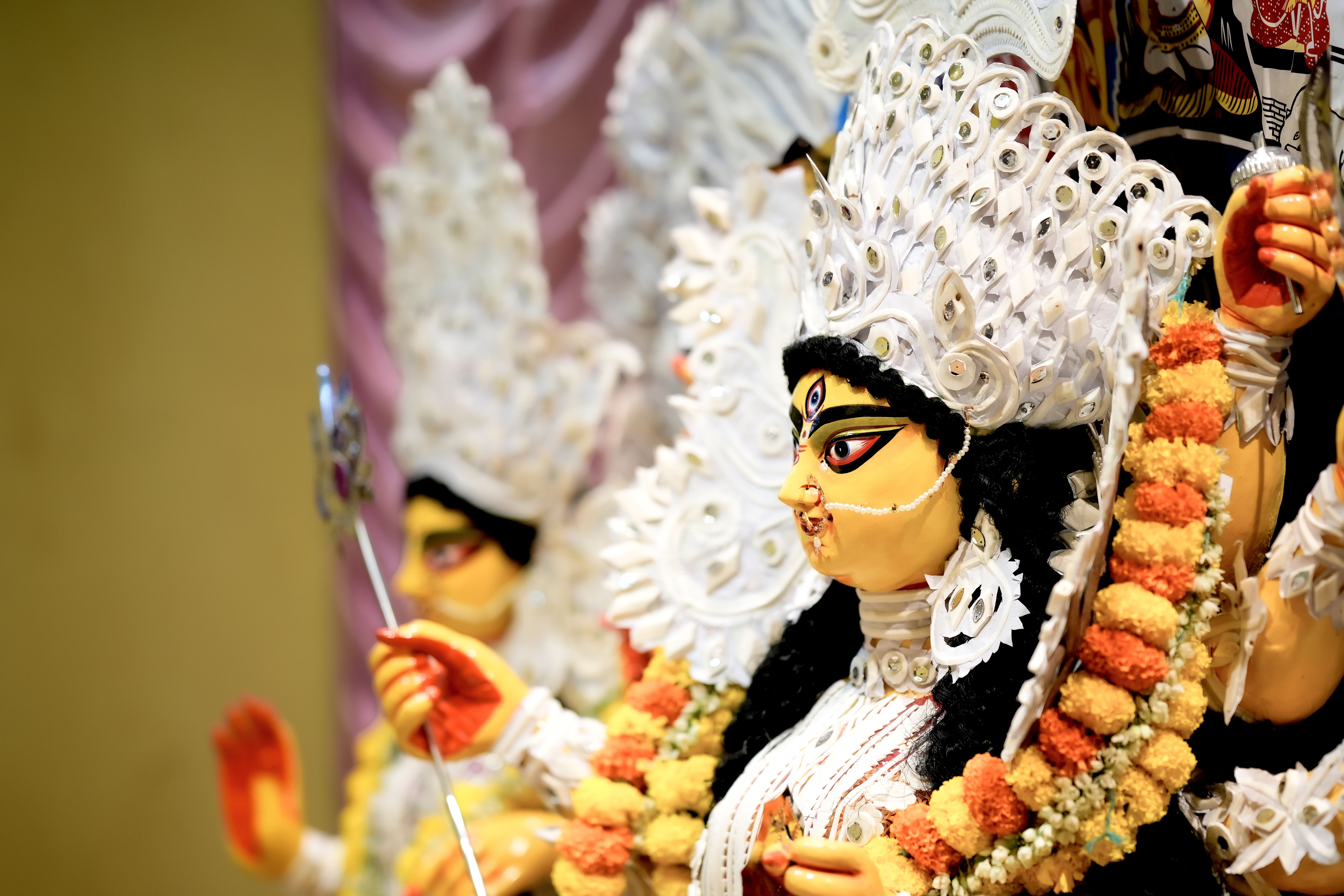
Durga Puja | A Heritage
About Durga Puja
Durga Puja is an annual Hindu festival that celebrates the victory of the goddess Durga over the buffalo demon Mahishasura. It is a major festival in India, particularly in West Bengal, and is celebrated with great enthusiasm and devotion. The festival typically lasts for ten days, with the last five days being the most significant. During this time, elaborate pandals (temporary structures) are set up, and devotees offer prayers, perform rituals, and participate in cultural events. Durga Puja is not only a religious celebration but also a cultural extravaganza that brings communities together to celebrate art, music, dance, and food.
The Defeat of Mahishasura
Legend has it that the shape-shifting buffalo demon Mahishasura obtained a boon that no man or god could defeat him. As he unleashed chaos across the heavens, the Holy Trinity—Brahma, Vishnu, and Shiva—combined their collective energies (Tejas) to create Goddess Durga. Armed with ten weapons bestowed by the gods and mounted upon a fierce lion, Durga waged a ten-day battle against Mahishasura, ultimately restoring cosmic balance on Vijaya Dashami.
The 10 Days of Puja
Durga Puja is celebrated over a span of ten days, each with its own significance and rituals.
Mahalaya: The ceremonial invocation inviting Goddess Durga to Earth through chants of Mahishasuramardini.
Shashthi: The first day of the main festival, marking the arrival of Goddess Durga.
Saptami: The second day, where devotees offer prayers and perform rituals to honor the goddess.
Ashtami: The third day, considered the most auspicious, featuring the Kumari Puja and Sandhi Puja ceremonies.
Navami: The fourth day, dedicated to the goddess's victory over Mahishasura, with special prayers and offerings.
Dashami: The final day, also known as Vijayadashami, when the idol of Goddess Durga is immersed in water, symbolizing her return to the divine realm.